Pages

Autism Treatment : ABA, RDI, and Sensory Treatment

Saturday, 8 February 2014
Autism Treatment : ABA, RDI, and Sensory Treatment

Autism


Autism is a disorder of neural development characterized by impaired social interaction and verbal and non-verbal communication, and by restricted, repetitive or stereotyped behavior. The diagnostic criteria require that symptoms become apparent before a child is three years old. Autism affects information processing in the brain by altering how nerve cells and their synapses connect and organize; how this occurs is not well understood. It is one of three recognized disorders in the autism spectrum (ASDs), the other two being Asperger syndrome, which lacks delays in cognitive development and language, and pervasive developmental disorder, not otherwise specified (commonly abbreviated as PDD-NOS), which is diagnosed when the full set of criteria for autism or Asperger syndrome are not met.
Autism has a strong genetic basis, although the genetics of autism are complex and it is unclear whether ASD is explained more by rare mutations, or by rare combinations of common genetic variants. In rare cases, autism is strongly associated with agents that cause birth defects.Controversies surround other proposed environmental causes, such as heavy metals, pesticides or childhood vaccines; the vaccine hypotheses are biologically implausible and lack convincing scientific evidence. The prevalence of autism is about 1–2 per 1,000 people worldwide, and it occurs about four times more often in boys than girls.The Centers for Disease Control and Prevention (CDC) report 20 per 1,000 children in the United States are diagnosed with ASD as of 2012, up from 11 per 1,000 in 2008. The number of people diagnosed with autism has been increasing dramatically since the 1980s, partly due to changes in diagnostic practice and government-subsidized financial incentives for named diagnoses;the question of whether actual prevalence has increased is unresolved.

Causes


It has long been presumed that there is a common cause at the genetic, cognitive, and neural levels for autism's characteristic triad of symptoms. However, there is increasing suspicion that autism is instead a complex disorder whose core aspects have distinct causes that often co-occur.
Three diagrams of chromosome pairs A, B that are nearly identical. 1: B is missing a segment of A. 2: B has two adjacent copies of a segment of A. 3: B's copy of A's segment is in reverse order.
Deletion (1), duplication (2) and inversion (3) are all chromosome abnormalities that have been implicated in autism.[50]
Autism has a strong genetic basis, although the genetics of autism are complex and it is unclear whether ASD is explained more by rare mutationswith major effects, or by rare multigene interactions of common genetic variants. Complexity arises due to interactions among multiple genes, the environment, and epigenetic factors which do not change DNA but are heritable and influence gene expression.[20] Studies of twins suggest thatheritability is 0.7 for autism and as high as 0.9 for ASD, and siblings of those with autism are about 25 times more likely to be autistic than the general population.[40] However, most of the mutations that increase autism risk have not been identified. Typically, autism cannot be traced to a Mendelian(single-gene) mutation or to a single chromosome abnormality, and none of the genetic syndromes associated with ASDs have been shown to selectively cause ASD. Numerous candidate genes have been located, with only small effects attributable to any particular gene. The large number of autistic individuals with unaffected family members may result from copy number variations—spontaneous deletions or duplications in genetic material during meiosis.Hence, a substantial fraction of autism cases may be traceable to genetic causes that are highly heritable but not inherited: that is, the mutation that causes the autism is not present in the parental genome.
Several lines of evidence point to synaptic dysfunction as a cause of autism. Some rare mutations may lead to autism by disrupting some synaptic pathways, such as those involved with cell adhesion. Gene replacement studies in mice suggest that autistic symptoms are closely related to later developmental steps that depend on activity in synapses and on activity-dependent changes. All known teratogens (agents that cause birth defects) related to the risk of autism appear to act during the first eight weeks from conception, and though this does not exclude the possibility that autism can be initiated or affected later, it is strong evidence that autism arises very early in development.
Although evidence for other environmental causes is anecdotal and has not been confirmed by reliable studies, extensive searches are underway.Environmental factors that have been claimed to contribute to or exacerbate autism, or may be important in future research, include certain foods, infectious disease, heavy metals, solvents, diesel exhaust, PCBs, phthalates andphenols used in plastic products, pesticides, brominated flame retardants, alcohol, smoking, illicit drugs, vaccines, and prenatal stress, although no links have been found, and some have been completely disproven.
Parents may first become aware of autistic symptoms in their child around the time of a routine vaccination. This has led to unsupported theories blaming vaccine "overload", a vaccine preservative, or the MMR vaccine for causing autism.The latter theory was supported by a litigation-funded study that has since been shown to have been "an elaborate fraud". Although these theories lack convincing scientific evidence and are biologically implausible, parental concern about a potential vaccine link with autism has led to lower rates of childhood immunizations,outbreaks of previously controlled childhood diseases in some countries, and the preventable deaths of several children


Many children with autism and related disorders exhibit unwanted behaviors, such as head-banging or slapping others. For parents and other caregivers, trying to reduce these behaviors can be difficult and frustrating. In fact, efforts at discouragement often end up making the behaviors more frequent.
One approach for dealing with these issues is applied behavior analysis, or ABA, training. One of the most widely accepted autism therapies, 32 out of the 50 states in the U.S. have laws that require health insurers to cover it.

Read more ...

Latest Treatment For Cancer

Thursday, 6 February 2014
Latest Treatment For Cancer


Cancer is a nearly invincible disease that has plagued humankind for centuries. Only in recent decades have doctors found effective ways to treat it. In that time we have also found better methods for early detection of this devastating disease. Despite great efforts to develop better treatments, more than 6 million people worldwide died from cancer in 1997. And we are still years away from any possible cure for cancer, something that many scientists think is impossible. While early detection is your best form of prevention, there are several techniques that are used to treat cancer. As you can read in our article on How Cancer Works, these techniques include:
  • Surgery
  • Radiation therapy
  • Chemotherapy
  • Hormone therapy
  • Immunotherapy


Surgery is the oldest and most widely used treatment available for cancer patients. About 60 percent of people diagnosed with cancer will undergo surgery, according to the American Cancer Society. If a growth is found early, doctors may opt to remove it before it has a chance to grow. Surgery is also used when there is a good chance to remove an entire tumor before it spreads. Surgery is rarely used as a stand-alone treatment. Usually, it is combined with radiation therapy and /or chemotherapy.
In radiation therapy, the specific part of the body containing a cancerous growth is exposed to radiation energy to attack reproducing cancer cells. However, the radiation cannot affect the cancer cells without affecting normal cells, which can lead to several unpleasant side effects, including fatigue, dryness and peeling of skin, nausea and vomiting. Radiation therapy is often used to shrink a tumor so that it can be removed through surgery, or to prevent tumor growth following surgery.
Chemotherapy, the treatment of cancer through drugs, is an effective treatment method for fighting cancerous cells that have spread to other parts of the body and that cannot be treated with any other method. There are dozens of cancer drugs that, in some cases, can cure the cancer, limit the spread of cancer and alleviate the symptoms of cancer. Similar to radiation therapy, chemotherapy also can affect normal cells, causing the same kinds of side effects.
Two more recent treatments for cancer are hormone therapy and immunotherapy. Hormone therapy involves anything that deals with manipulating the body's hormones to treat the cancer, including administering hormones and drugs. Doctors may also remove hormone glands to kill cancer cells or prevent further cancerous growth. Immunotherapy also manipulates the body's normal functions. During immunotherapy, patients are given medication to stimulate the body's immune system to fight cancerous cells.
Read more ...

Top 5 Medical Technology Innovations

Sunday, 2 February 2014

Top 5 Medical  Technology Innovations


Against the backdrop of health care reform and a controversial medical device tax, medical technology companies are focusing more than ever on products that deliver cheaper, faster, more efficient patient care. They are also making inroads with U.S. Food & Drug Administration regulators to re-engineer the complex review and approval process for new medical devices.
Many in the industry have long felt overly burdened by what they consider to an unnecessarily complex approval process. Critics claim it impedes innovation and delays the availability of better health care. To change that perception, the FDA last year announced a new Medical Device Innovation Consortium (MDIC) charged with simplifying the process of designing and testing new technologies. With input from industry, government, and other nonprofit organizations, public-private MDIC will prioritize the regulatory science needs of the medical device community and fund projects to streamline the process.
"By sharing and leveraging resources, MDIC may help industry to be better equipped to bring safe and effective medical devices to market more quickly and at a lower cost," says Jeffrey Shuren, M.D., J.D., director of the FDA's Center for Devices and Radiological Health.
As the regulators, politicians, and corporate executives hash out these details, industry engineers and scientists continue to push through new ideas for improving and managing human health. Every year, industry observers like the Cleveland Clinic and the medical device trade press single out their favorite technology trends. These thought leaders agree that today's best technologies strike a balance between reducing the overall cost of medical care and increasing safety and survival rates—and isn't that what health care reform is all about?
Here are five emerging technologies to watch in the year ahead.


The MelaFind optica

1. Cutting Back on Melanoma Biopsies

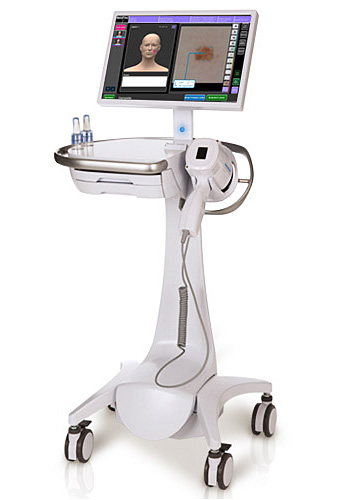
With the most deadly form of skin cancer, melanoma, a huge number of dangerous-looking moles are actually harmless, but has always been impossible to know for sure without an invasive surgical biopsy. Today dermatologists have new help in making the right call — a handheld tool approved by the FDA for multispectral analysis of tissue morphology. The MelaFind optical scanner is not for definitive diagnosis but rather to provide additional information a doctor can use in determining whether or not to order a biopsy. The goal is to reduce the number of patients left with unnecessary biopsy scars, with the added benefit of eliminating the cost of unnecessary procedures. The MelaFind technology (MELA Sciences, Irvington, NY) uses missile navigation technologies originally paid for the Department of Defense to optically scan the surface of a suspicious lesion at 10 electromagnetic wavelengths. The collected signals are processed using heavy-duty algorithms and matched against a registry of 10,000 digital images of melanoma and skin disease.
The ATI Neurostimu

2. Electronic Aspirin

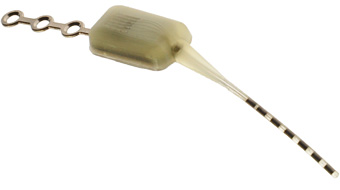
For people who suffer from migraines, cluster headaches, and other causes of chronic, excruciating head or facial pain, the "take two aspirins and call me in the morning" method is useless. Doctors have long associated the most severe, chronic forms of headache with the sphenopalatine ganglion (SPG), a facial nerve bundle, but haven't yet found a treatment that works on the SPG long-term. A technology under clinical investigation atAutonomic Technologies, Inc., (Redwood City, CA) is a patient-powered tool for blocking SPG signals at the first sign of a headache. The system involves the permanent implant of a small nerve stimulating device in the upper gum on the side of the head normally affected by headache. The lead tip of the implant connects with the SPG bundle, and when a patient senses the onset of a headache, he or she places a handheld remote controller on the cheek nearest the implant. The resulting signals stimulate the SPG nerves and block the pain-causing neurotransmitters.
The Symph

3. Needle-Free Diabetes Care

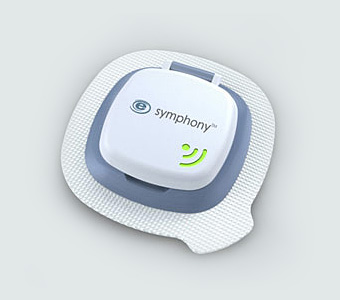
Diabetes self-care is a pain—literally. It brings the constant need to draw blood for glucose testing, the need for daily insulin shots and the heightened risk of infection from all that poking. Continuous glucose monitors and insulin pumps are today's best options for automating most of the complicated daily process of blood sugar management – but they don't completely remove the need for skin pricks and shots. But there's new skin in this game. Echo Therapeutics(Philadelphia, PA) is developing technologies that would replace the poke with a patch. The company is working on a transdermal biosensor that reads blood analytes through the skin without drawing blood. The technology involves a handheld electric-toothbrush-like device that removes just enough top-layer skin cells to put the patient's blood chemistry within signal range of a patch-borne biosensor. The sensor collects one reading per minute and sends the data wirelessly to a remote monitor, triggering audible alarms when levels go out of the patient's optimal range and tracking glucose levels over time.

The Telemedic

4. Robotic Check-Ups

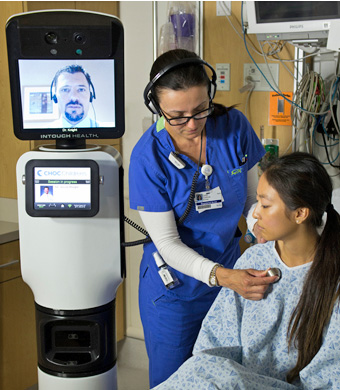
A pillar of health reform is improving access to the best health care for more people. Technology is a cost-effective and increasingly potent means to connect clinics in the vast and medically underserved rural regions of the United States with big city medical centers and their specialists. Telemedicine is well established as a tool for triage and assessment in emergencies, but newmedical robots go one step further—they can now patrol hospital hallways on more routine rounds, checking on patients in different rooms and managing their individual charts and vital signs without direct human intervention. The RP-VITA Remote Presence Robot produced jointly by iRobot Corp. and InTouch Health is the first such autonomous navigation remote-presence robot to receive FDA clearance for hospital use. The device is a mobile cart with a two-way video screen and medical monitoring equipment, programmed to maneuver through the busy halls of a hospital.

The Sapien tra
5. A Valve Job with Heart

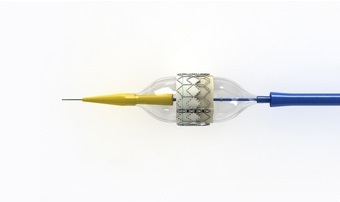
The Sapien transcatheter aortic valve is a life-saving alternative to open-heart surgery for patients who need new a new valve but can't endure the rigors of the operation. Manufactured by Edwards Life Sciences (Irvine, CA), the Sapienhas been available in Europe for some time but is only now finding its first use in U.S. heart centers—where it is limited only to the frailest patients thus far. The Sapien valve is guided through the femoral artery by catheter from a small incision near the grown or rib cage. The valve material is made of bovine tissue attached to a stainless-steel stent, which is expanded by inflating a small balloon when correctly placed in the valve space. A simpler procedure that promises dramatically shorter hospitalizations is bound to have a positive effect on the cost of care.


Read more ...